Sub-soil Drainage
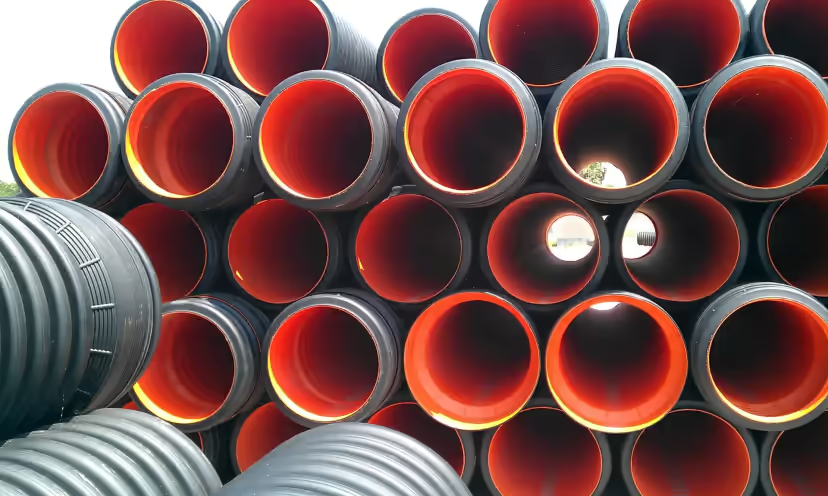
Perforated DWC pipe that keeps groundwater away from structures.
Overview
Perforated lines laid behind retaining walls, around basement rafts and under road sub-bases to collect groundwater and hold the water table down.
Specification
- Product range: Alcorr DWC HDPE (Perforated)
- Standard: IS 16098 (Part 2)
- Drainage Sizes: ID 75 mm to ID 400 mm
- Stiffness Class: SN 4 / SN 8 class
- Standard Code: IS 16098 (Part 2)
Why HDPE here
- Factory-cut slots take in a lot of water along the whole run
- The double-wall profile holds its shape under deep burial
- Relieves the water pressure that would otherwise push against a basement wall
Typical deployments
- Retaining wall weep channels
- Basement foundation perimeter drains
- Highway sub-base dewatering
- Landslide prevention drains
Specification and site notes
Relieve the pressure, do not resist it
A retaining wall or basement raft is far cheaper to drain than to build strong enough to hold back the full water pressure. The perforated drain behind the wall is what makes the structural assumption valid: if it clogs, the wall is carrying a load it was never designed for.
Filter media and envelope
Surround the perforated line with graded granular fill and a geotextile envelope. The filter, not the pipe, is what determines whether the drain is still working in twenty years.
Perforated in, solid out
Perforate only the collection run. The carrier section to the sump or outfall must be solid-wall, or the drain discharges back into the ground it just dewatered.
Access for maintenance
Bring rodding eyes or inspection chambers to the surface at every change of direction. A buried drain with no access is a drain that cannot be proven to work when the basement starts to seep.
FAQ
Why does a basement or retaining wall need a perforated drain?
To take the water pressure off it. Building the structure strong enough to resist the full head is far more expensive than draining the water away, so the drain is what makes the structural assumption valid. If it clogs, the wall carries a load it was never designed for.
Should a sub-soil drain be wrapped in geotextile?
Yes, together with a graded granular surround. The filter media, not the pipe, is what determines whether the drain is still functioning in twenty years. Perforations that clog with fine soil stop working long before the pipe fails.
Can the whole run be perforated?
No. Only the collection run is perforated; the carrier section to the sump or outfall must be solid-wall, otherwise the drain discharges back into the ground it has just dewatered.
What sizes are used for foundation and retaining wall drains?
ID 100 mm to ID 200 mm perforated collection runs cover most building perimeters, discharging into an ID 200 mm to ID 400 mm solid carrier where the catchment is large.
Commonly specified sizes
Related applications
See also
For CAD drawings, compliance certificates and B2B pricing estimates, contact mktg@alom.in.
Product Range
Company & Resources