Sports Fields & Stadia Drainage
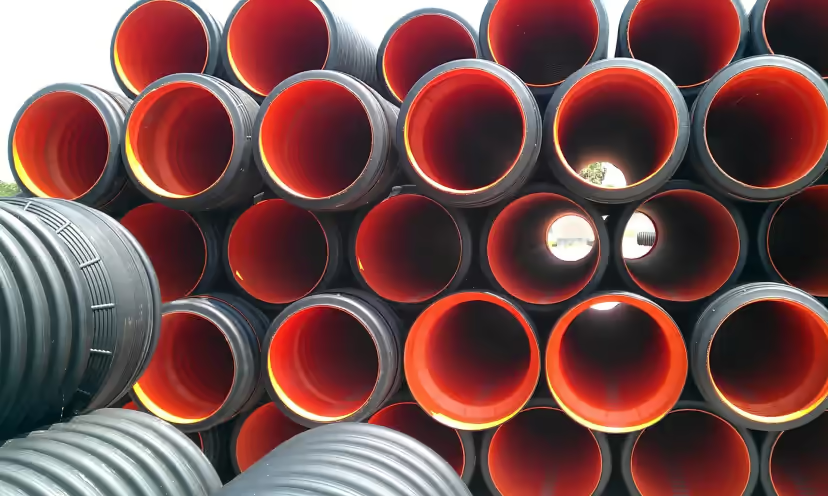
Perforated DWC pipe that gets a pitch back in play after heavy rain.
Overview
Drainage laid under cricket outfields, football pitches and golf courses. It pulls water out of the rootzone quickly, so the surface drains instead of turning to mud.
Specification
- Product range: Alcorr DWC HDPE (Perforated)
- Standard: IS 16098 (Part 2)
- Drainage Sizes: ID 75 mm to ID 800 mm
- Stiffness Class: SN 4 / SN 8 class
- Standard Code: IS 16098 (Part 2)
Why HDPE here
- Slots are cut in the factory, so water enters evenly along the whole run
- The smooth bore carries sand through instead of blocking
- Bends to follow the contours of the playing surface
Typical deployments
- Cricket outfield sub-soil loops
- Football field perimeter drainage
- Golf course greens drainage
- Track perimeter drains
Reference project
- M. Chinnaswamy Stadium Outfield Drainage — KSCA, Bengaluru
Specification and site notes
Laterals perforated, collector solid
The radial or herringbone laterals are perforated to take water in; the collector and outfall run should be solid-wall so the water it has gathered is carried away instead of being re-injected into the profile further along. Getting this the wrong way round is the commonest design error on a pitch drainage layout.
The envelope decides the lifespan
A sand-carpet or gravel surround plus a geotextile envelope is what keeps fines out of the slots. The pipe will last decades; an unwrapped drain in a sandy rootzone can clog within a couple of seasons.
Gradient over diameter
Pitch drainage is limited by intake and by fall, not by pipe capacity. Hold a consistent gradient to the collector. ID 100 mm laterals into an ID 200 mm to ID 400 mm collector covers most outfields; the Chinnaswamy gallery took its trunk main to ID 800 mm.
Working under finished turf
The flexible profile follows the surveyed contour of the playing surface without fabricated bends, and it is light enough to place by hand inside a narrow trench without tracking heavy plant across the rootzone.
FAQ
How does sub-soil drainage speed up pitch recovery after rain?
A perforated lateral network intercepts water in the rootzone and moves it to a solid collector and outfall, instead of letting it sit in the profile. That is what turns a wash-out into a resumption of play: the surface drains rather than ponds.
Should the whole drainage network be perforated?
No. Laterals are perforated to take water in; the collector and the outfall run should be solid-wall, or the collector re-injects into the profile further along. This is the most common mistake in a pitch drainage layout.
What pipe sizes are used for a stadium outfield?
ID 100 mm perforated laterals in a radial or herringbone pattern, discharging into an ID 200 mm to ID 400 mm solid collector. Large venues take the trunk main to ID 600 mm or ID 800 mm, as the Chinnaswamy Stadium gallery did.
Do sports drains need a geotextile wrap?
In a sand-carpet or sandy rootzone, yes. The envelope is what stops fines migrating into the slots. An unwrapped drain can clog within a couple of seasons while the pipe itself is still sound.
Commonly specified sizes
Related applications
See also
For CAD drawings, compliance certificates and B2B pricing estimates, contact mktg@alom.in.
Product Range
Company & Resources