Power & HV Conduits
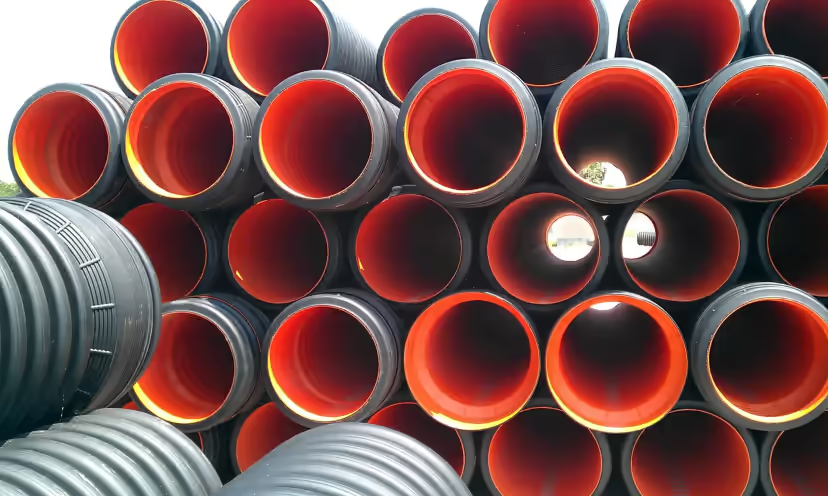
Crush-rated DWC ducts protecting high-voltage cable.
Overview
Buried ducts carrying high-voltage (HV) cable, substation feeds and city power rings. Built to take both the heat coming off the cable and the weight of traffic above it.
Specification
- Product range: Telecorr DWC HDPE
- Standard: IS 16205 (Part 24)
- Duct Sizes: ID 50 mm to ID 250 mm
- Standard Code: IS 16205 (Part 24)
- Compression Class: 750N heavy duty conduit
Why HDPE here
- The duct wall does not conduct electricity, which removes a shock risk
- 750N heavy-duty class stands up to being buried under a road
- Carries no fault current, so there is nothing to earth
Typical deployments
- Substation signal feeds
- HV electrical distribution
- IT park power rings
- Railway power crossings
Specification and site notes
An insulator, so nothing to earth
HDPE does not conduct electricity, so the duct itself carries no fault current and needs no bonding. That removes an entire class of hazard compared with a steel conduit run near an HV cable.
Heat and current rating
A cable in a duct carries less current than the same cable buried direct, because the duct wall and the air gap around it both trap heat. Duct spacing within the bank and the thermal backfill around it are what recover that margin, so the bank has to be designed, not just the duct.
Always 750N under a road
Specify the heavy-duty compression class for any crossing under a carriageway, a rail formation or a construction access route. Standard duty belongs on verge and footpath routes only.
Spares and draw ropes
Include spare ways in every duct bank with draw ropes pre-installed. Power demand grows and the trench is already closed, and a spare way is the cheapest capacity anyone will ever buy on that route.
FAQ
Is DWC HDPE conduit safe for high-voltage cable?
Yes. HDPE is an insulator, so the duct carries no fault current and needs no earth bonding, which removes a class of hazard that exists with steel conduit near an HV cable.
Does the duct affect the cable's current rating?
Yes, and downwards. Any cable in a duct carries less than the same cable buried direct, because the duct wall and the air gap around it each trap heat. Duct spacing in the bank and the thermal backfill around it are what recover that margin, so the reduction comes out of the bank design, not the duct alone.
What compression class is needed for power ducts?
750N heavy duty for any crossing under a carriageway, rail formation or construction access route. 450N standard duty is for verge and footpath routes only.
What duct sizes suit HV distribution?
ID 100 mm to ID 152 mm covers most HV distribution feeders; ID 200 mm and ID 250 mm are used for large substation feeds and multi-cable trunk sections.
Commonly specified sizes
Related applications
See also
For CAD drawings, compliance certificates and B2B pricing estimates, contact mktg@alom.in.
Product Range
Company & Resources