Street Lighting & Signalling
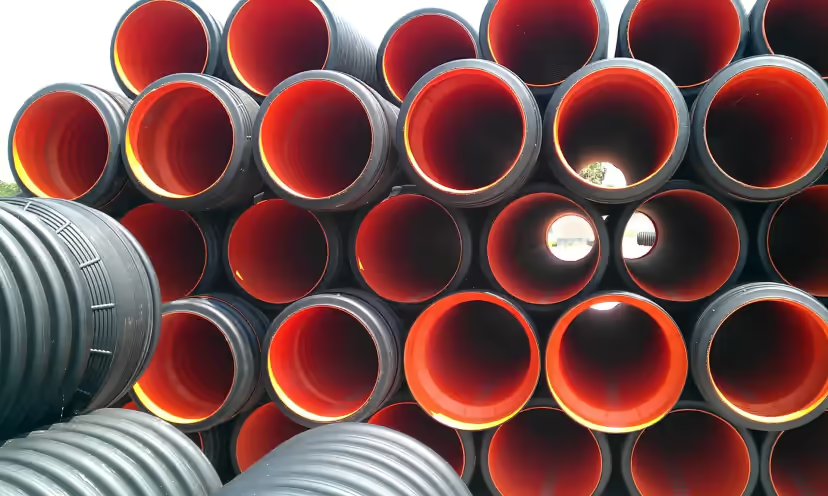
Light ducts for street lighting, signal and sensor cable.
Overview
Ducts carrying the power cable for street lamps, traffic signals, city cameras and perimeter sensors.
Specification
- Product range: Telecorr DWC HDPE
- Standard: IS 16205 (Part 24)
- Duct Sizes: ID 50 mm to ID 135 mm
- Standard Code: IS 16205 (Part 24)
- Compression Class: 450N standard duty
Why HDPE here
- Sized for thin cable, so the trench stays narrow and cheap
- Built-in socket joints keep dirt and silt out of the duct
- Supplied in coils, so a run goes in fast with no joints along the way
Typical deployments
- Urban street lighting
- Traffic signal loops
- CCTV pole feeds
- Smart city sensor networks
Specification and site notes
Small bore, low trench cost
Lighting and signalling cables are small-section, so ID 50 mm to ID 135 mm is enough. The saving on a lighting scheme is in the trench width and the cost of putting the surface back, not in the duct itself, and over-sizing here buys nothing.
Coils and continuous runs
Small diameters supplied in coils go in as continuous runs between lamp bases with no intermediate joint, which is what makes a trench-and-lay operation quick on a live footpath.
450N is the right class
Standard duty suits footpath, verge and median routes. Step up to 750N only where the duct actually crosses a carriageway. Treating every route as heavy duty is a common and needless cost on lighting packages.
Draw ropes and pole bases
Leave a draw rope in every duct and seal the ends at each pole base and feeder pillar. Silt entering an open duct at a pole base is the reason a cable will not pull months later.
FAQ
What duct size is used for street lighting cable?
ID 50 mm to ID 135 mm. Lighting, signalling and CCTV cables are thin, and over-sizing the duct only widens the trench, which is where the cost on a lighting scheme actually sits.
Do street lighting ducts need heavy-duty class?
No. 450N standard duty is correct for footpath, verge and median routes. Step up to 750N only where the run actually crosses a carriageway.
Why supply lighting ducts in coils?
So a run goes between lamp bases as one continuous length with no intermediate joint. That is what makes a trench-and-lay operation fast on a live footpath, and it removes the joints that silt gets into.
What conduit do smart-city sensor and CCTV networks use?
The same Telecorr DWC range to IS 16205 (Part 24). ID 50 mm and ID 76 mm cover camera and sensor feeds; the corrugated wall protects the cable and the sealed sockets keep the bore clean.
Commonly specified sizes
Related applications
See also
For CAD drawings, compliance certificates and B2B pricing estimates, contact mktg@alom.in.
Product Range
Company & Resources