Telecom & OFC Networks
Smooth-bore ducts that let cable be pulled a long way in one go.
Overview
Ducts that protect optical fibre on inter-city backbone routes, last-mile FTTH connections and city telecom rings. The smooth inner wall means less drag on the cable as it is pulled through.
Specification
- Product range: Telecorr DWC HDPE
- Standard: IS 16205 (Part 24)
- Duct Sizes: ID 50 mm to ID 250 mm
- Standard Code: IS 16205 (Part 24)
- Compression Class: 450N / 750N strength
Why HDPE here
- Silicone-lined smooth bore, so the cable slides through with very little drag
- Built-in socket joints keep water and dust out
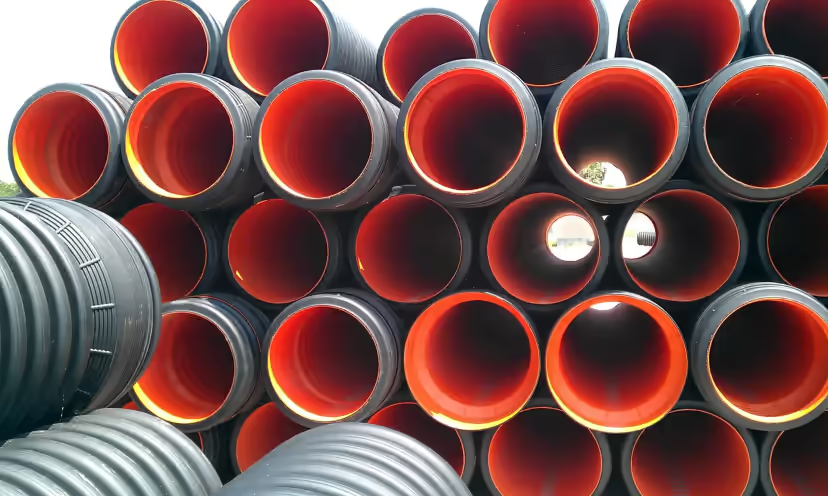
- The ribbed outer wall takes the knocks so the fibre inside does not
Typical deployments
- FTTH optical fiber backbones
- Mobile tower backhaul loops
- Inter-city OFC corridors
- Utility cable protection
Specification and site notes
Pulling tension and duct choice
The low-friction inner bore is what governs achievable pull length; a silicone-infused wall keeps the coefficient of friction low enough for long backbone pulls without an intermediate pit. Where blown-fibre installation is planned, confirm the bore finish rather than the outside diameter, because that is the surface the technique depends on.
Compression class
450N is the standard-duty class for footpath and verge routes. Specify 750N under carriageways, at road crossings and anywhere the duct will sit beneath a construction access route during the build.
Keeping the bore clean
Cap or plug every open end at the close of each shift and leave a pre-installed draw rope in place. Silt entering an open duct is the single most common cause of a failed pull weeks later, and it is entirely avoidable.
Jointing and sealing
Integrated push-fit sockets with a sealing ring keep groundwater and dust out of the duct bank. A sealed duct stays dry, and a dry duct is what protects the fibre through the monsoon.
FAQ
What duct size is used for FTTH and OFC networks?
ID 50 mm and ID 76 mm carry most last-mile FTTH distribution. Inter-city OFC backbone routes and shared duct banks typically use ID 100 mm to ID 150 mm, with larger sizes reserved for multi-cable trunk runs.
What is the difference between 450N and 750N ducts?
It is the compression class, the crush resistance of the duct wall. 450N is standard duty for footpaths and verges; 750N is heavy duty for carriageway crossings, railway ballast zones and any route carrying construction traffic during the build.
Why does the inner bore matter for cable pulling?
Pull tension rises with the friction between cable and bore. The silicone-infused smooth inner wall keeps that coefficient low, so longer sections can be pulled between pits, so fewer joints, fewer chambers and less civil work.
Is Telecorr duct certified?
Telecorr conforms to IS 16205 (Part 24) and is BIS-certified. Test certificates for each despatched batch are available for the consulting engineer.
Commonly specified sizes
Related applications
See also
For CAD drawings, compliance certificates and B2B pricing estimates, contact mktg@alom.in.
Product Range
Company & Resources